
WalterPicks - Fantasy Football
WalterPicksSports
4.795.00 Reviews
- Version
- 3.219.0
- Installs
- 50.00K
- Age Rating
- Everyone
Screenshots
Our Review of WalterPicks - Fantasy Football
 Analysis by Appyee
I approached WalterPicks as a fantasy football companion rather than another app that simply displays player names and projections. Its focus is decision support: preparing for a draft, checking league information, researching players, and thinking through trades before I commit. That makes it most interesting when I am already managing a fantasy team and want several tools in one place instead of jumping between a league app, a rankings page, and a separate trade calculator.
The app comes from WalterPicks, is listed in the Sports category, and is free to install. It has built a strong user response, with a 4.7 average from over 500 ratings and more than 50 thousand installs. Those figures suggest a solid niche audience, although I would still treat the app as a practical tool to test against my own league habits rather than assuming it will suit every fantasy format.
How WalterPicks fits into a real fantasy football routine
My favorite way to use it is in stages. Before a draft, I would start with rankings and research, then use the draft-oriented tools to keep a plan in view. During the season, the emphasis shifts toward league synchronization, player comparisons, and trade analysis. That change matters because fantasy football has two very different moods: preparation is deliberate, while weekly management is hurried. A useful app needs to support both without making me rebuild my workflow every time.
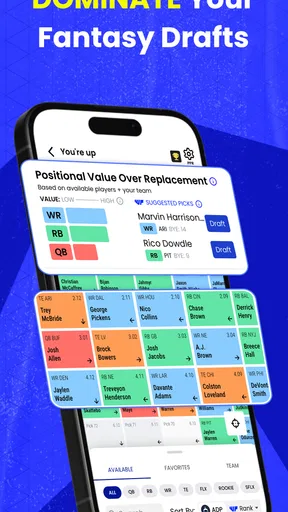
The store summary points to a Draft Kit, League-Sync, Rankings, Trade Analyzer, and Player Research. In practical terms, that combination is more valuable than any single feature. Rankings alone can be found almost everywhere, but rankings connected to league context are more useful because a player’s value depends on roster construction, scoring rules, positional scarcity, and what my opponents already have.
I would not describe WalterPicks as a replacement for the platform where a league is hosted. It is better understood as a companion layer. I still expect to make official lineup changes, accept trades, and check league messages in the league’s own app. WalterPicks is where I would pause before those actions and ask whether the move makes sense.
Draft preparation is where the app makes its clearest case
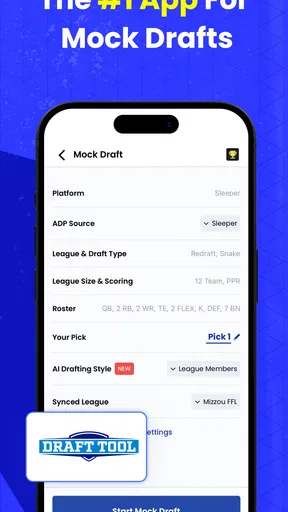
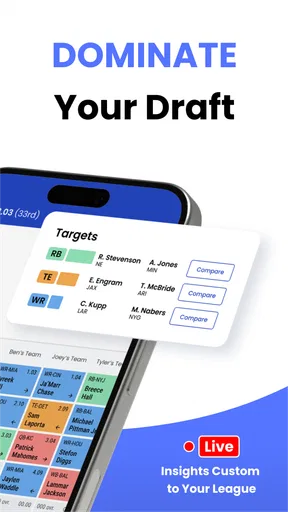
A draft can become messy when I rely on memory. I may like a player, forget a position is already deep, or chase a name after an unexpected run. A draft-focused workspace helps turn those reactions into a plan. I can use rankings as a starting point, research players before the draft, and keep my choices connected to the shape of my roster instead of treating every pick as an isolated decision.
One useful habit is to review the rankings before draft day and mark the players I genuinely want, the players I would accept at the right value, and the players I would avoid. That three-level approach is more practical than following one ordered list blindly. If the room suddenly pushes quarterbacks early, for example, the right response may be patience rather than panic. The app’s value is not that it makes the decision for me; it gives me a place to organize the decision.
I also found that draft tools work best when I use them as guardrails, not as an autopilot. A ranking can highlight a strong opportunity, but it cannot know how aggressively the people in my room draft, whether my league rewards certain positions unusually, or whether I personally prefer a safer roster. I would keep a little flexibility and treat the suggested order as informed guidance.
League-Sync can reduce manual work, but it deserves attention
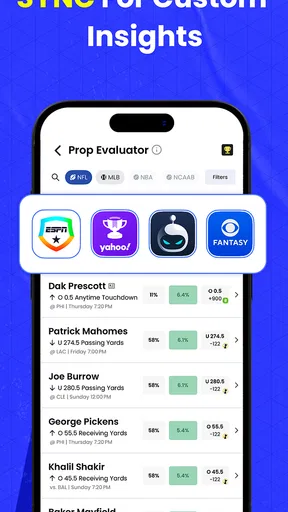
League-Sync is one of the more important ideas in the app because fantasy advice becomes much more useful when it reflects my actual league. Without synchronization, I would have to recreate rosters, scoring details, and available players by hand, which defeats much of the convenience. Connecting the app to a league can make research and trade evaluation more relevant than a generic public ranking.
This is also the point where I become more careful about trust. Any time an app connects to a fantasy league account or imports league information, I want to understand what account is being connected, what access is requested, and what choices are presented during setup. I would read each permission or sign-in screen instead of tapping through automatically. The visible controls matter more to me than broad assurances: I want to know whether the connection can be removed, whether I can choose which league to use, and whether the app clearly distinguishes imported league information from my own notes or analysis.
The practical tip is to synchronize only the league I am actively managing first. That gives me a chance to check whether the teams, scoring settings, and player pool look correct before relying on a trade recommendation. If something appears inconsistent, I would stop and verify the league connection rather than making a roster decision based on an incorrect setup.
Research is more helpful when I ask a specific question
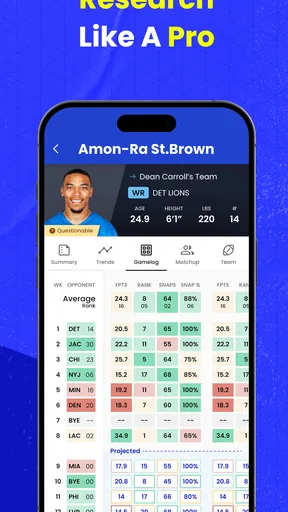
Player Research sounds broad, but I get more from it when I approach it with a defined question. Instead of opening a player page just to browse, I might ask whether a running back is worth targeting in a trade, whether a wide receiver fits a roster that already has volatility, or whether a highly ranked player solves an actual weakness on my team.
That distinction prevents a common fantasy mistake: collecting information without making a decision. I would compare a small group of realistic options, then return to my roster and league situation. The app is most useful when research leads to an action such as holding, offering, declining, or waiting. It is less useful if I use it to endlessly refresh rankings while avoiding the uncomfortable part of choosing.
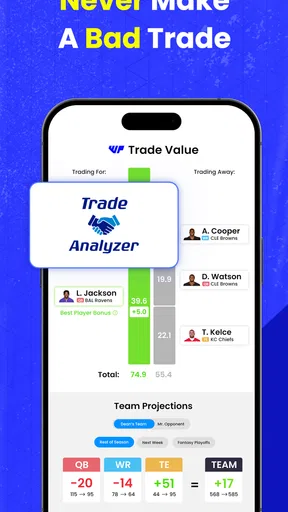
Another good workflow is to separate the player’s general value from the price I would pay. A player can be attractive in isolation and still be a poor trade target if the cost damages depth elsewhere. I would use WalterPicks to investigate the player, then use the Trade Analyzer to test the complete exchange. That two-step process is stronger than trusting a single score.
Trade analysis should support judgment, not replace it
The Trade Analyzer is likely to be the feature I open most often during the season. Trade decisions are difficult because they combine player value, roster balance, schedule preferences, risk tolerance, and the other manager’s needs. A calculator can make the comparison clearer, but the result is only as useful as the assumptions behind it.
My advice is to test trades from both sides. First, I would enter the deal as proposed and look at what it does to my roster. Then I would consider why the other manager might accept it and whether the exchange actually addresses a need for them. If the tool suggests that a deal is favorable but the offer leaves my lineup thin at a key position, I would not send it just because the number looks attractive.
A less obvious use is evaluating a trade that I am not ready to send. I can use the analyzer to identify which part of my roster has the most movable value and which position I should target in return. That turns the tool into a negotiation aid rather than a simple yes-or-no button. I would still check the final proposal manually, because a fair calculation does not guarantee that the other manager will view the players in the same way.
Trust starts with visible choices and careful account handling
For a fantasy app, trust is not only about whether the rankings look sensible. It is also about how comfortably I can control the connection between the app and my league account. I look for clear sign-in steps, understandable permission requests, obvious league selection, and a straightforward way to stop using synchronized information. I also want the app to make it clear when I am viewing imported league details versus general research.
WalterPicks is developed by WalterPicks, and the app is available for Everyone. That age label makes it approachable, but it does not remove the need for sensible account habits. I would use a strong, unique password for the fantasy platform itself, avoid sharing login details inside messages, and review any account prompt before approving it. Those are simple steps, yet they matter more than a polished interface when an app is connected to personal league activity.
I also pay attention to moments where data becomes especially sensitive from a user-control perspective. League synchronization, roster imports, trade evaluations, and any account-related screen deserve more attention than simply reading a player article. I would avoid connecting multiple leagues until I understood how the app separates them, and I would periodically check that the active league is the one I intended to analyze.
My standard is straightforward: I should be able to make an informed choice at each connection point. If a screen explains what will happen and gives me a clear option to continue or cancel, I feel more comfortable. If I am rushed through a vague prompt, I stop and investigate before proceeding. That cautious approach is especially useful for a free app, because the absence of an upfront purchase does not by itself explain how an account connection or optional paid feature works.
Free access and optional spending
The app is free to install, which makes it easy to test during draft preparation or a single fantasy season. It also includes in-app purchases ranging from $8.99 to $169.99 per item. That is a wide span, so I would not assume that every useful tool is included at no cost. Before paying, I would identify exactly which feature or access period the purchase unlocks and whether it solves a problem I actually have.
My preferred approach would be to use the free experience first. I would check whether the rankings fit my league, whether synchronization behaves as expected, and whether the research workflow is faster than my current routine. Only after that trial would I consider spending money. A paid upgrade makes sense for someone who manages multiple teams, spends significant time on draft preparation, or wants a more structured analysis process. It is harder to justify for a casual player who checks a lineup once a week.
The purchase range also changes how I evaluate value. I would compare the cost with the number of decisions I expect the app to improve, not with the excitement of draft season. If I only need a second opinion on occasional trades, free resources or the tools already included in my league platform may be enough. If I want a dedicated workspace throughout the season, the convenience could be worthwhile, provided the controls and terms are clear before checkout.
Where it is stronger than ordinary fantasy tools
The usual alternative is a collection of separate services: one for rankings, one for news, one for trade values, and the official league app for rosters. That approach can work, but it creates friction. I have to move player names between screens, remember which scoring system each tool assumes, and mentally combine advice that was never designed to work together.
WalterPicks has a more coherent appeal because its named tools cover several stages of the same decision. Draft preparation, league context, research, and trades are connected ideas. The advantage is not necessarily that every individual analysis will be better than every competing source. The advantage is that I can build a repeatable process without constantly copying information from one place to another.
It is also more useful than a basic rankings app when I need context. A list can tell me who is valued highly, but it cannot by itself explain whether that player improves my particular roster. League-Sync and trade analysis are valuable precisely because they move the conversation from “Who is good?” to “What should I do with my team?”
Still, a specialist news source may be better for breaking updates, and the official league app remains the safer place for final roster actions. I would not abandon those alternatives. I would use WalterPicks as the planning and comparison layer, then confirm important changes in the official league environment.
Who should use it, and who should skip it
I think the app is a good fit for fantasy managers who enjoy preparing, compare trade options carefully, or manage a roster that needs more than quick weekly suggestions. It should also appeal to someone who dislikes maintaining several spreadsheets and wants rankings, research, and trade thinking in one sports app.
A first-time fantasy player may appreciate the structure, but should avoid treating every recommendation as a rule. The best learning comes from asking why a player is attractive and how that fits the league. WalterPicks can organize the information; it cannot teach me the personalities of my league mates or predict which manager will overreact after one big game.
I would skip it if my fantasy routine is extremely simple. If I only set a lineup, make obvious waiver moves, and rarely trade, a separate analysis app may add more screens than value. I would also hesitate if I dislike connecting third-party tools to league accounts or if I want one official platform for every action. In that case, the extra workflow may not feel worth it.
Everyday scenario: from a worried roster to a measured offer
Imagine I am heading into a busy weekend with a weak second running-back spot and a deep group of wide receivers. I would begin with Player Research to identify realistic running-back targets, not just the most famous names. I would then compare those players with the needs of managers in my league and use the Trade Analyzer to test offers involving one of my surplus receivers.
Before sending anything, I would check whether the proposed trade leaves my starting lineup stronger and whether the other manager receives a position they can actually use. If the first offer looks too aggressive, I would adjust the players rather than sending a lopsided proposal. Afterward, I would verify the final transaction in the league’s official app. This workflow uses WalterPicks for analysis while keeping the actual league action under my direct control.
The same principle works during draft season. I might research a group of players before the room opens, use the Draft Kit to organize priorities, and then adapt when the draft moves unexpectedly. The app gives me a reference point, but I remain responsible for timing, roster construction, and knowing when the room has made the obvious recommendation too expensive.
Version, compatibility, and the day-to-day experience
The current version is 3.219.0, and the app runs on Android 7.0 or later. That relatively broad compatibility makes it accessible to people who are not using a recent phone, although performance can still depend on the device and on how smoothly league information loads. I would update before draft day rather than waiting until the last minute, especially if the app is central to my preparation.
The app is designed for repeated reference rather than one long reading session. I would expect to open it briefly, check a player or trade, close it, and return later with new information. That makes organization and clarity more important than decorative presentation. The strongest experience comes when I already know what decision I am trying to make.
There is also a mental limitation worth mentioning: more analysis can create false confidence. A ranking, trade score, or research page may make a decision feel objective even when the underlying situation is uncertain. I would use WalterPicks to expose trade-offs, not to pretend that fantasy football has guaranteed answers. That mindset keeps the app useful instead of letting it become an excuse to overanalyze.
My cautious verdict
WalterPicks is a focused fantasy football app with a sensible collection of tools for drafting, league-aware research, and trade planning. I like it most as a companion that helps me slow down before making a roster decision. The combination is more practical than a standalone rankings list, especially for managers who want a repeatable workflow across the season.
My recommendation comes with conditions. Start free, connect only the league you intend to use, read each account and permission screen, and verify imported information before acting on it. Treat optional purchases as a decision based on regular use rather than a draft-day impulse. Most importantly, keep final roster actions in the official league platform and use this app to think through the move first.
My bottom line is that WalterPicks is worth trying if you want structured fantasy decisions without maintaining several separate tools. It is not essential for a casual manager, and it cannot replace personal judgment, league knowledge, or official account controls. For an engaged player who researches targets, weighs trades, and wants more context than a basic rankings page provides, it offers a useful middle ground between scattered fantasy resources and an overly complicated spreadsheet.
Verdict
Strengths of WalterPicks - Fantasy Football
- Simple interface makes player picks quick to submit.
- Useful for casual leagues and fans who enjoy weekly predictions.
- Can add extra excitement to watching live football games.
- Lightweight concept is easy to understand for new fantasy players.
- Pick-based format may require less time than managing a full fantasy roster.
Limitations of WalterPicks - Fantasy Football
- Limited appeal if your friends or league do not use the app.
- Player and matchup data may depend on timely updates.
- Predictions can feel repetitive over a long season.
- May offer fewer statistics than established fantasy platforms.
- Availability and features could vary by country or competition.
Similar Picks in This Category
View All
BeSoccer: Soccer Live Score
BeSoccer apps4.3

Cricbuzz - Live Cricket Scores
Cricbuzz.com3.7

NFL
NFL Enterprises LLC2.4

Da Fit
MO YOUNG LIMITED3.6

ESPN
Disney4.5

LiveScore: Live Sports Scores
LiveScore Limited4.5
Frequently Asked Questions
What is WalterPicks - Fantasy Football?
WalterPicks - Fantasy Football is a fantasy football companion app designed to help users make more informed lineup and roster decisions. It typically provides player evaluations, matchup analysis, projections, rankings, and other football insights in one place. The app is aimed at fantasy managers who want additional information before setting weekly lineups, making waiver claims, or considering trades.
Can WalterPicks help me choose my starting lineup?
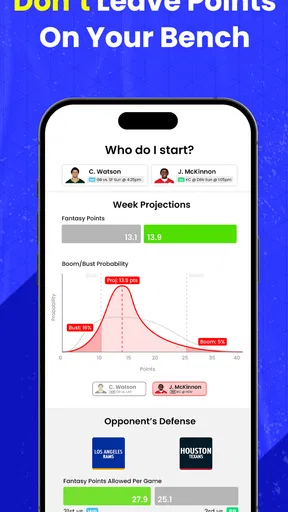
Yes, the app is intended to support weekly lineup decisions by comparing players and presenting relevant fantasy football information. Depending on the league, scoring format, and available data, it may help identify favorable matchups, potential breakout candidates, injury concerns, and underperforming options. However, its recommendations should be treated as guidance rather than guaranteed predictions, since injuries, coaching changes, weather, and unexpected game situations can affect results.
Does WalterPicks support every fantasy football platform and league format?
Compatibility can vary depending on the version of the app and the fantasy platform you use. Before downloading, check whether WalterPicks supports your league provider, scoring settings, roster positions, and competition type. Standard formats may be covered more consistently than highly customized leagues. If your league uses unusual rules, manually comparing the app’s projections with your settings is especially important.
Is WalterPicks - Fantasy Football free to use?
The app may offer free access to some fantasy football tools while reserving advanced analysis, premium projections, or additional features for a subscription or in-app purchase. Pricing and available features can change over time, so users should review the current App Store or Google Play listing before installing. Also check whether a trial automatically converts into a paid subscription and learn how cancellation works.
Is WalterPicks suitable for beginners as well as experienced fantasy managers?
WalterPicks can be useful for both beginners and experienced players, although each group may use it differently. New managers can benefit from rankings, explanations, and matchup information when learning how to evaluate players. More experienced users may use it as a second opinion alongside their own research. It should not replace understanding your league’s scoring rules, roster requirements, and transaction deadlines.
